Automotive Products / Driver & Occupant Intelligence

DMS/OMS under mirror

HORUSEE IRVM brings driver monitoring, occupant monitoring and precision gaze into an interior rear-view mirror. Built on the established HORUSEE platform, it is engineered for wide-angle cabin sensing and OEM vehicle integration.

Product samples available for OEM evaluation

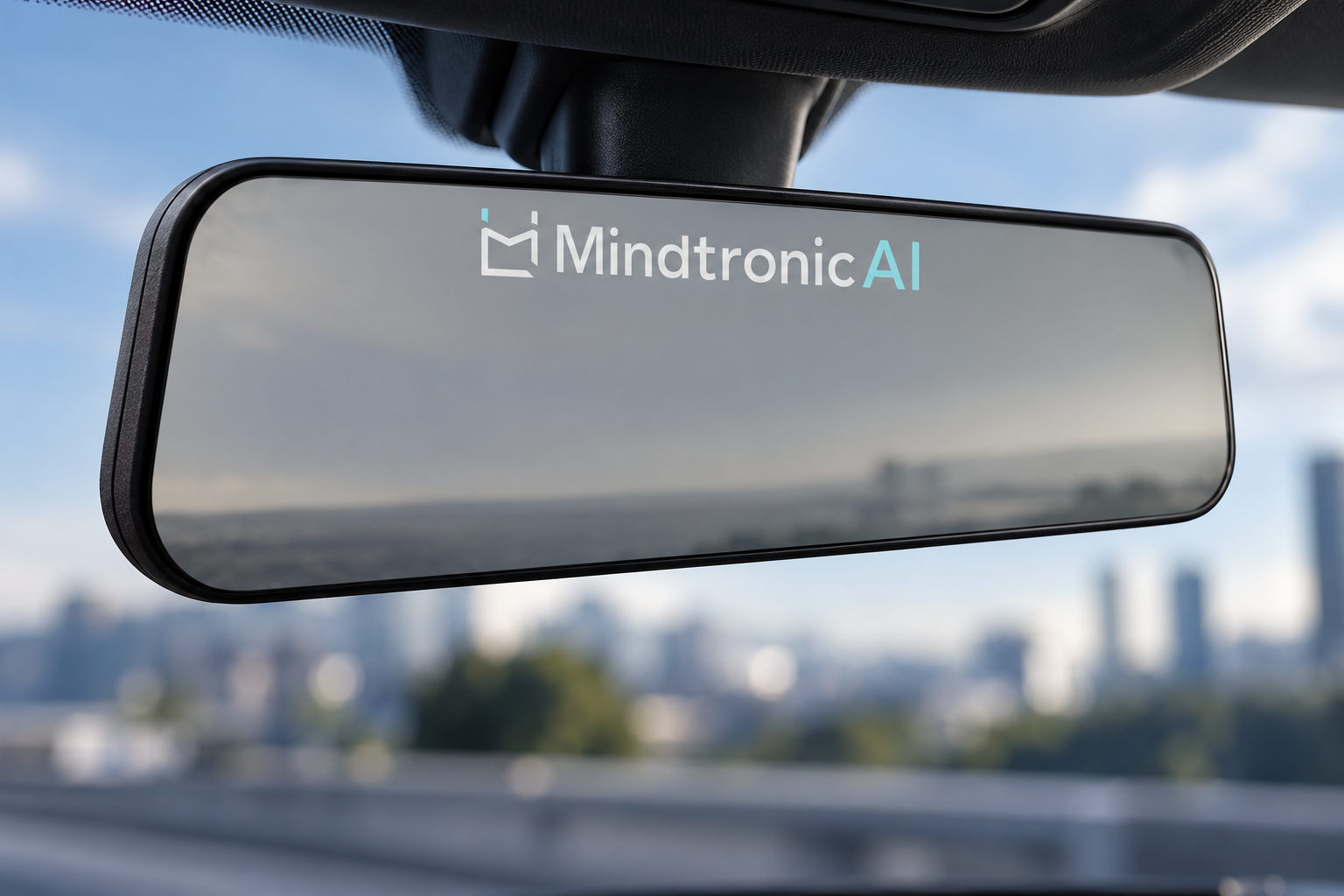
Concept illustration of an intelligent rear-view mirror with driver and occupant sensing
Illustrative product concept · Final mirror packaging is vehicle specific

01 / OEM product snapshot

The essentials for an IRVM program.

A functional under-glass mirror sample, with the interfaces and automotive engineering foundation needed to begin an OEM evaluation.

Request Technical Review →
SENSING & FUNCTIONS

DMS + OMS + precise gaze

  • Driver drowsiness, distraction and attention assessment
  • Occupant detection and program-configured cabin functions
  • Gaze tracking from a wide-angle, under-glass camera
  • 940 nm near-infrared illumination for day and night sensing
INSTALLATION & PACKAGE

Mirror-mounted architecture

Reference main unit
253.55 × 70 × 22 mm
Mounting
Interior mirror button; OEM package adaptation
Electrical
12 V / 24 V vehicle supply
Enclosure
Current OTS sample design; dimensions subject to OEM customization
REGULATORY PERFORMANCE

Built for vehicle assessment

DDAW / ADDW
IRVM performance validated against (EU)DDAW & ADDW requirements
Euro NCAP
Validation against NCAP DSM protocols
EMC
Certified with UNECE R10 qualification
AUTOMOTIVE INTEGRATION

Designed for the vehicle lifecycle

Vehicle network
CAN 2.0 / CAN FD, configured to OEM signals
Diagnostics
UDS (ISO 14229) for service and lifecycle maintenance
Cybersecurity & updates
UNECE R155/R156 program processes, CSMS and SUMS
Temperature
−40 to +85 °C automotive-grade design range

Reference dimensions and electrical details describe the current sample configuration. Final enclosure, operating envelope, EMC evidence, cybersecurity scope and regulatory approval are confirmed for the OEM vehicle program. Existing HORUSEE DMS homologation does not constitute approval of a new IRVM installation.

BEYOND THE MIRROR / HORUSEE COPILOT What if the vehicle knew which road risks the driver had seen? Explore the demonstrable Copilot concept →

02 / Intelligent mirror

Cabin intelligence in a natural location.

The interior mirror offers a discreet sensing position with a view across the cabin. HORUSEE IRVM is designed to fit the vehicle interior while providing the image detail needed for monitoring and gaze analysis.

01 / DRIVER

Driver monitoring

Assess drowsiness, distraction and attention using the established HORUSEE DMS foundation.

02 / CABIN

Occupant monitoring

Support cabin sensing functions configured for the seating layout and program requirements.

03 / GAZE

Precision gaze

Track where the driver is looking, even when wide-angle cabin imaging makes eye features harder to resolve.

03 / Distinctive capability

Precision gaze from a wide-angle mirror view.

A wide field of view helps cover the cabin, but it leaves fewer image pixels for each eye. Gaze estimation therefore becomes much harder than it is with a narrowly framed driver camera.

HORUSEE combines optical design, near-infrared sensing and perception engineering to preserve the eye information needed for driver attention and gaze-based applications.

Function performance and coverage are evaluated against the final vehicle geometry and mirror glass.

WIDE-ANGLE CABIN VIEW
EYE FEATURES
→ GAZE ESTIMATE
Cabin coverage and fine eye detail must be engineered together.

04 / System engineering

Engineered around the constraints of the mirror.

Image quality, infrared illumination, heat and available compute all affect the same system. HORUSEE IRVM addresses them as one vehicle architecture.

01

Through-glass imaging

Compensate for through-glass light attenuation by optimizing optics and near-infrared sensing.

02

Wide cabin coverage

Balance occupant coverage with the driver and eye detail demanded by monitoring functions.

03

Package and thermal limits

Optimize imaging and sensing under limited infrared emitting power and thermal constraints.

04

Embedded performance

Coordinate DMS, OMS and gaze pipelines within practical compute and memory limits.

05 / Automotive foundation

Built on the established HORUSEE platform.

HORUSEE IRVM uses the HORUSEE DMS platform foundation, including automotive development processes and vehicle integration capabilities. The mirror-specific configuration is then adapted and validated for the OEM vehicle program.

DDAW / ADDW experience PPAP process Cybersecurity CAN UDS diagnostics Lifecycle support

IRVM performance against DDAW, ADDW and applicable Euro NCAP protocols has been validated, while vehicle approval requires individual vehicle homologation.

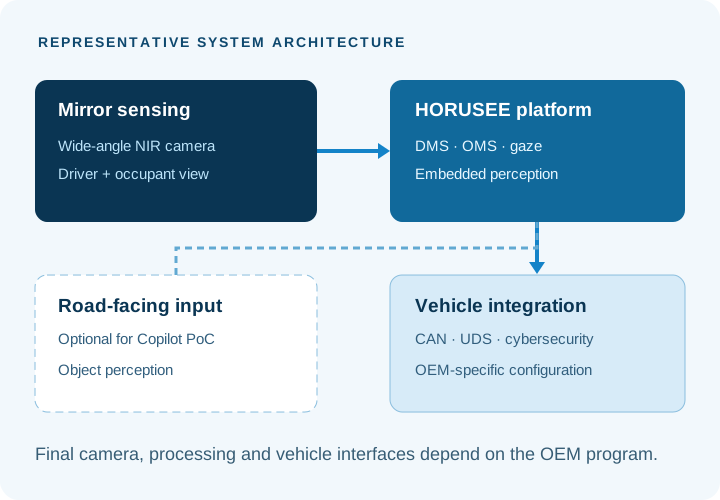
Cabin camera and gaze functions connect through the HORUSEE platform to vehicle interfaces; an optional road-facing input supports the Copilot proof of concept
Representative architecture · Physical interfaces depend on the OEM program

06 / HORUSEE Copilot · Demonstrable proof of concept

Mindtronic AI Copilot System

The road scene, seen through the driver's attention

Road perception detects developing situations. Precision gaze and driver-state assessment add the missing context: whether the driver appears to have noticed the relevant object.

Arrange a Copilot Demonstration →
Concept visualization of in-cabin and road-scene fusion

One hardware foundation. A broader safety opportunity.

Copilot brings road-object perception together with driver gaze and driver-state information to explore a more contextual assessment of risk. The proof of concept uses the HORUSEE IRVM hardware platform with a road-facing perception input. It can be demonstrated today; performance development and vehicle validation are still required for production use.

COPILOT STATUS / Working proof of concept · Demonstration available

Arrange a Copilot Demonstration →
01 Road objects
02 Driver gaze
03 Attention context
04 Risk assessment

Concept workflow · No production performance claim

07 / OEM integration

Start with a product sample. Shape the final mirror around your vehicle.

Functional samples support technical evaluation. The mirror enclosure, mounting, glass, interfaces and production tooling are developed for the OEM's selected vehicle package.

01

Evaluate

Review a functional IRVM sample and agree on target monitoring functions and performance.

02

Adapt

Fit the optical, electrical and enclosure design to the vehicle's mirror and cabin geometry.

03

Validate

Complete configuration-specific functional, environmental, regulatory and vehicle integration testing.

04

Industrialize

Finalize enclosure tooling, production processes and program-specific PPAP with qualified manufacturing partners.

Current demonstration enclosures are prototype fabricated. Production molding is specified with the OEM program.

08 / Start an OEM conversation

Bring us your mirror package and target functions.

Share your vehicle class, cabin layout, target markets, desired DMS/OMS functions and program timing. We can discuss a product sample, an RFQ or a Copilot demonstration.

For Copilot evaluation, mention “Copilot demo” in your inquiry.